Latin America's electronic music gets its big library
25 Nov 2026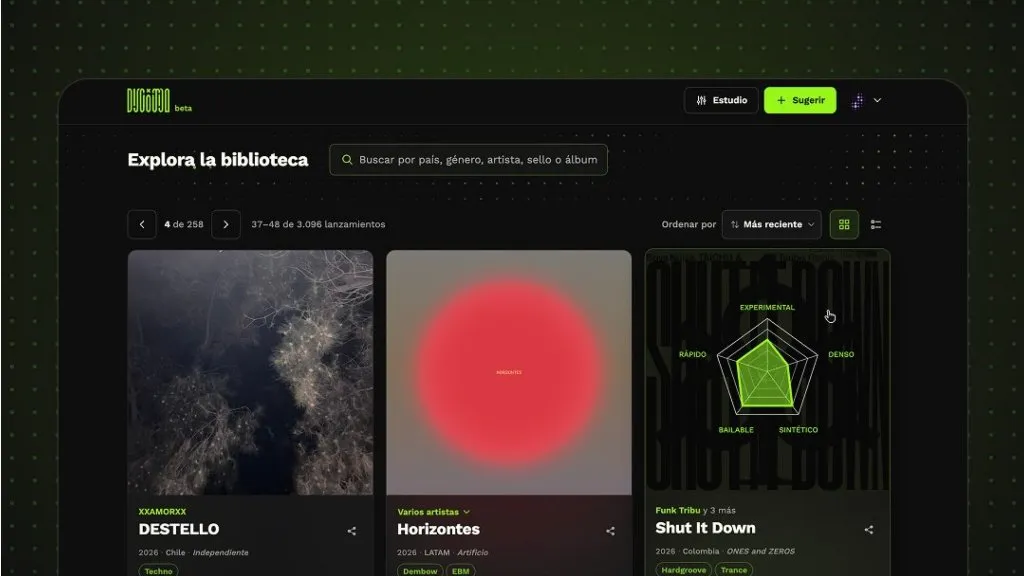 ABOUT KULISLatin America's electronic music gets its big library
DJs who want to trace the Latin American rhythms sampled on northern dancefloors back to their source now have a new address. On November 24, the electronic music platform Discótica opened Biblioteca Discótica, gathering electronic music from Latin America and the Caribbean under one roof: more than 3,000 releases, more than 5,000 artists and over 500 labels from 19 countries. Entries can be filtered by country, year and format, and the archive is open to submissions.
Background
According to Discótica's Substack announcement, the library idea dates back to the outlet's beginnings. Since 2020 the team has archived the regional electronic music that crossed its radar each year, and by 2025 the archive had outgrown its folders. Every entry has a card with artwork, artists, label, country, date and genre, most with a Bandcamp or SoundCloud player that lets listeners buy directly from artists. Releases are tagged with a five-axis sonic profile (experimental, dense, synthetic, danceable, fast), and each card recommends two releases with a similar profile, so discovery doesn't depend on listening-history algorithms. The library's code is also published on GitHub. Discótica runs a mix series and has thrown parties at venues such as Bogotá's Video Club.
Why it matters
Discótica argues that the region's rhythms are sampled in the north while recognition rarely flows back to their makers. The library is a response: a tool for DJs to bring local productions into their sets and for labels to find new names. The outlet's 25-album list covering 2000–2025, compiled with eight contributors, is part of the same effort. Where to start: from that list, Ricardo Villalobos's "Alcachofa" (2003), Matias Aguayo's "Ay Ay Ay" (2009) and Nicolas Jaar's "Space Is Only Noise" (2011).
What it means for Turkey
Of the names on that list, Ricardo Villalobos played Istanbul's Godet years ago, according to Time Out Istanbul. We could not find a comparable open library for Turkish electronic music searchable by country, year and sonic profile. Discótica's model is a good example for initiatives that want to make local producers and labels more visible.
Source: Resident Advisor Further reading: Discótica Substack, Discótica – 25 Discos, GitHub, Time Out Istanbul