Why a transition sounds wrong: the Camelot wheel and harmonic mixing
22 Nov 2026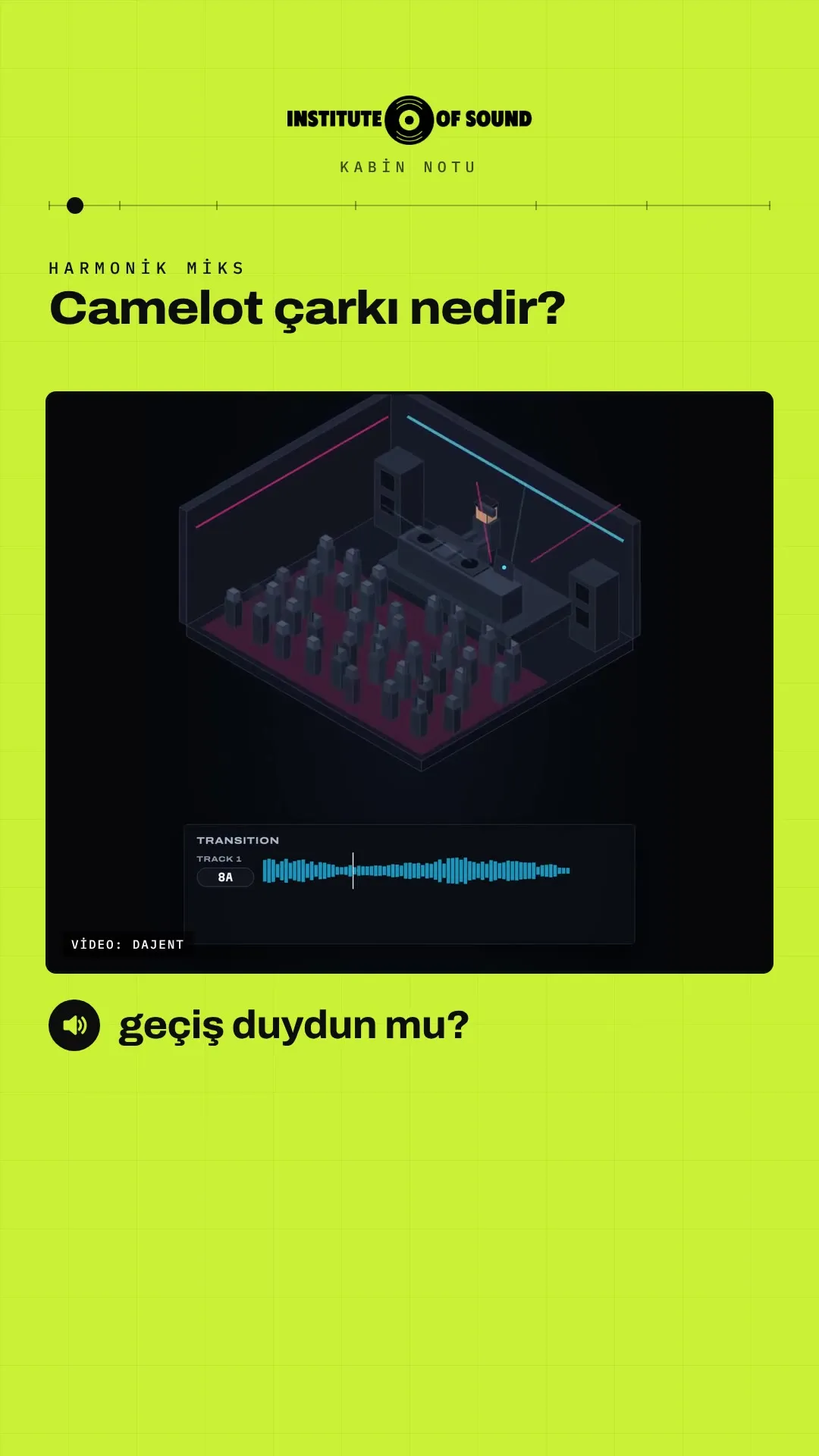 INSTITUTE OF SOUNDWhy a transition sounds wrong: the Camelot wheel and harmonic mixing
Sometimes two tracks are perfectly beatmatched and the transition is technically right, yet something sounds wrong. Usually it’s key clash.
Every track has a key
Tracks in compatible keys support each other; clashing keys rub against each other, especially with long overlapping basslines, chords and vocals.
The Camelot wheel
Developed by Mark Davis, it turns the circle of fifths into a clock face: numbers 1 to 12, inner ring (A) for minor keys, outer ring (B) for major. 8A = A minor, 8B = C major.
The rule: stay close
- Same number (8A → 8A): perfect match.
- One step up or down (8A → 9A or 7A): smooth.
- Same number, other ring (8A → 8B): minor to major, the mood brightens.
Moving clockwise lifts the energy slightly; some DJs use +2 steps as an “energy boost”.
Finding the key
Rekordbox, Serato and Traktor analyse keys and can show Camelot notation; Mixed In Key is more precise; stores like Beatport list keys.
Rules to break?
Harmonic mixing is a tool, not a law. It matters most in long, melodic and vocal transitions.
Free DJ workshop every Sunday in Harbiye. Get in touch for details. Institute of Sound · Harbiye, Istanbul.